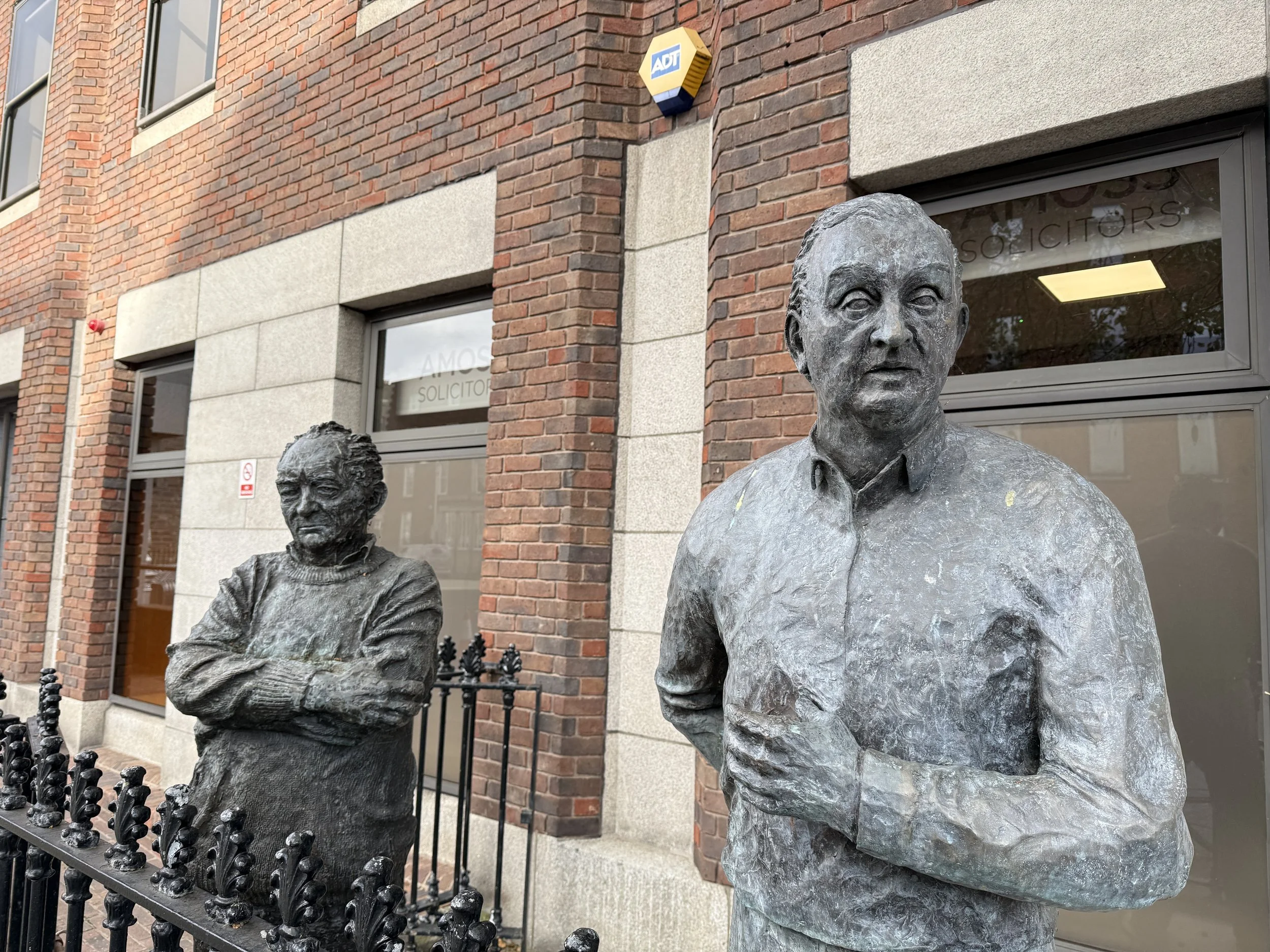
Brian Friel and John B. Keane
Ireland's Greatest Playwrights, Side by Side
Introduction
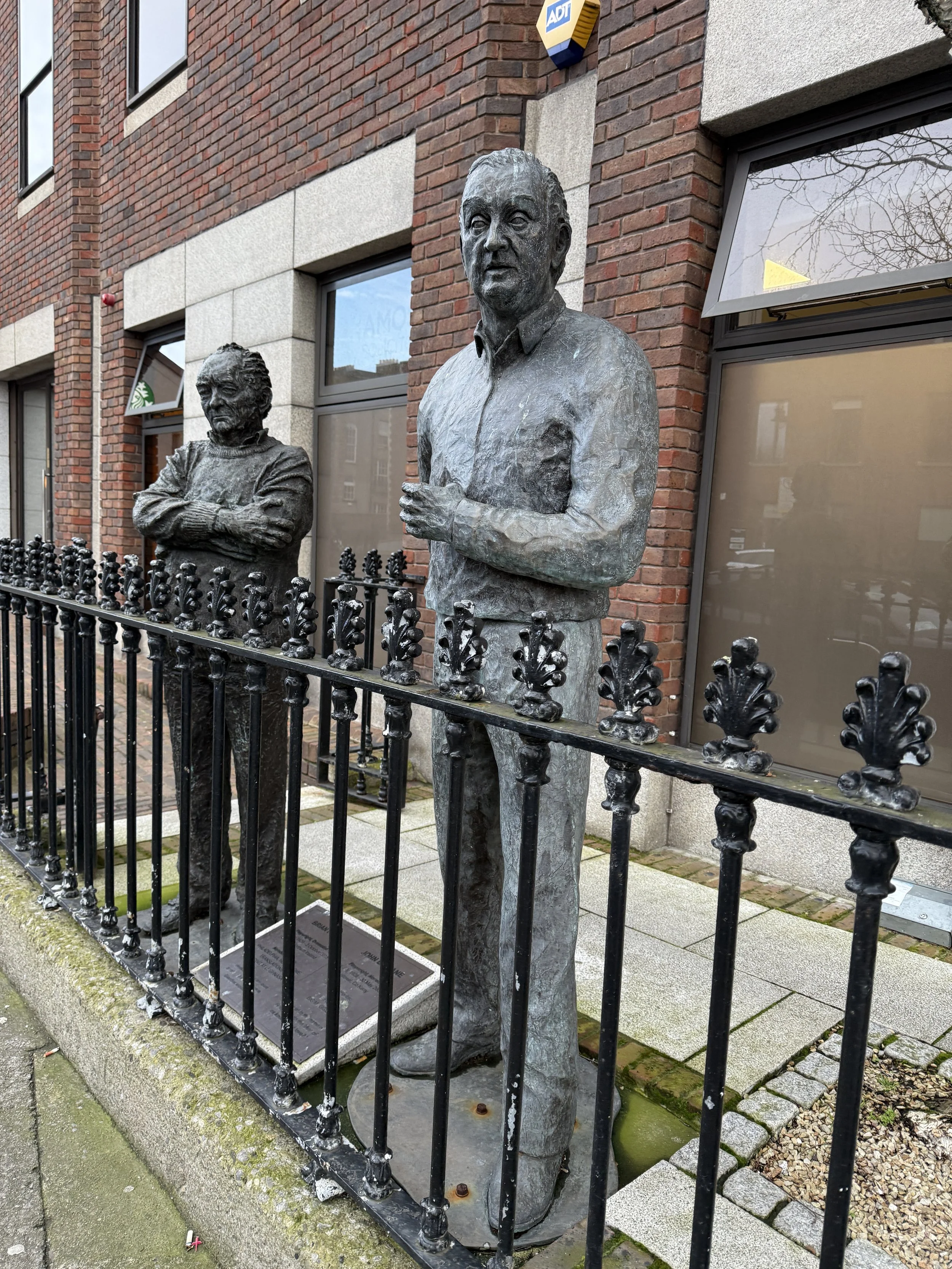
On a quiet street in Dublin, two bronze figures stand together behind iron railings, looking out at the world with the quiet authority of men who spent their lives finding truth in ordinary Irish life. One is from the north, one from the south. One wrote about displacement and language, the other about land and longing. Together, Brian Friel and John B. Keane represent the twin pillars of modern Irish theatre — and this double statue is one of the most quietly powerful pieces of public art in the country.
Most people walk past without a second glance. That's a shame, because the story behind these two men and the world they captured in their writing is one of the great stories of twentieth century Ireland.
The Statue
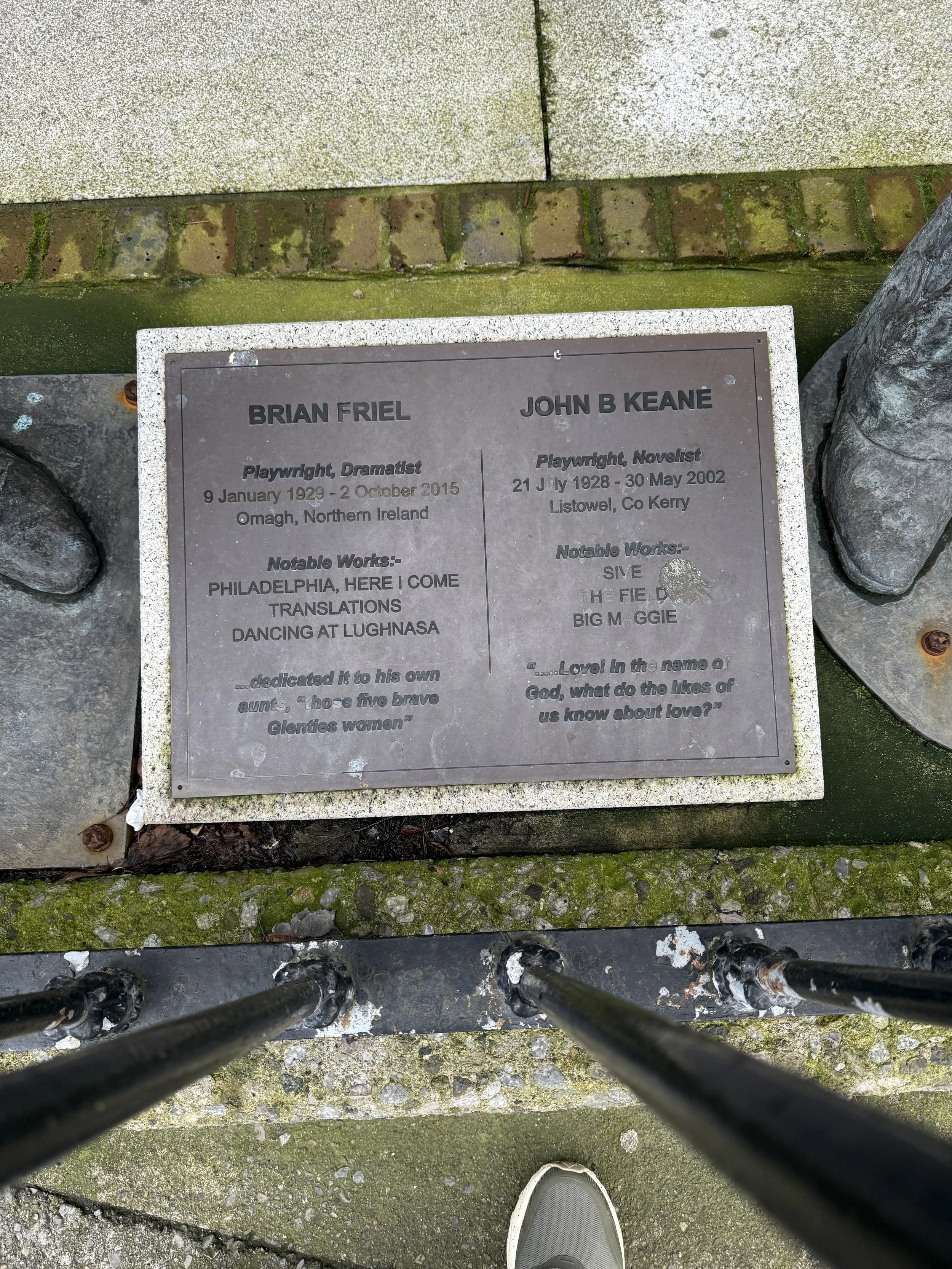
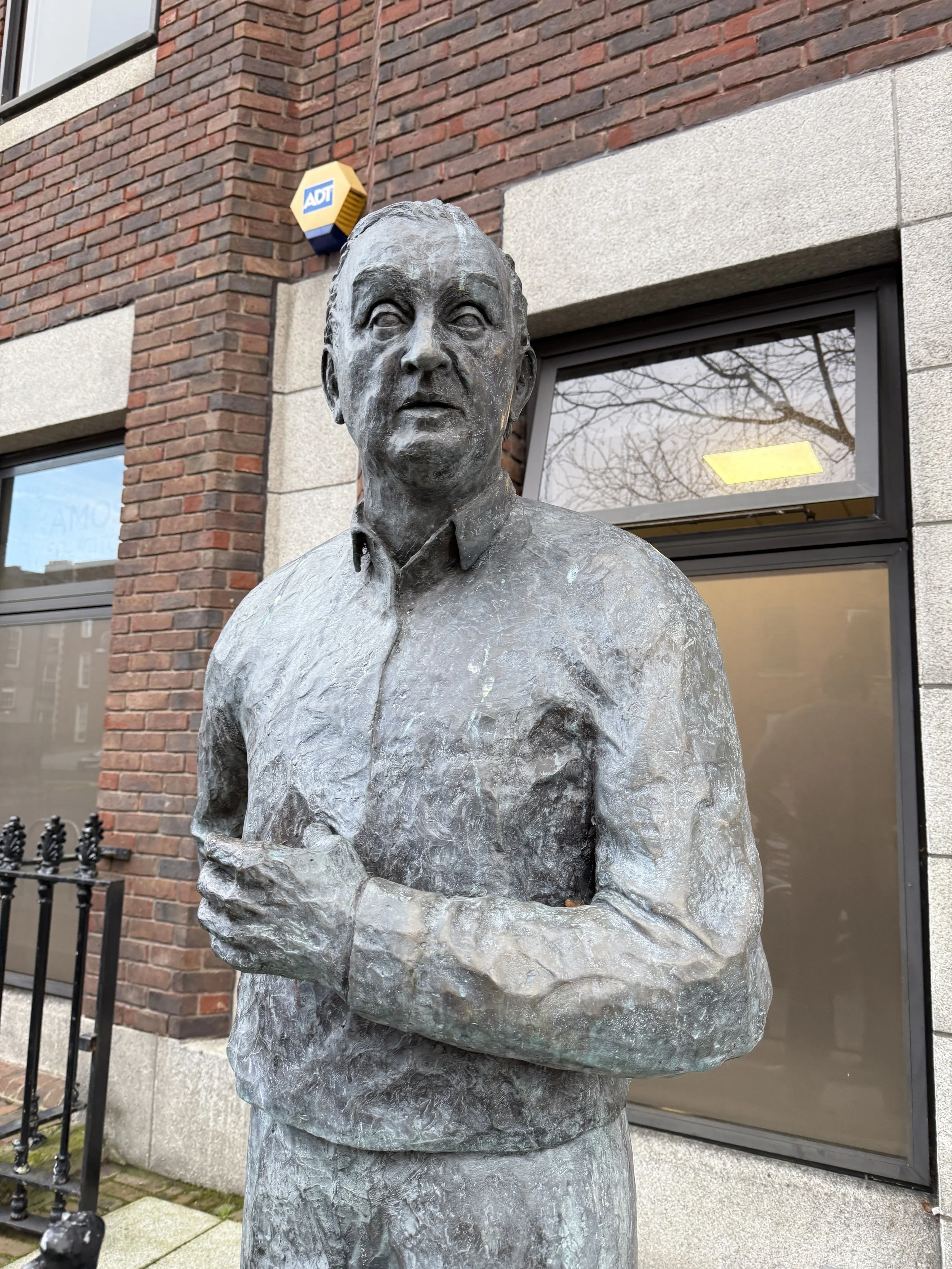
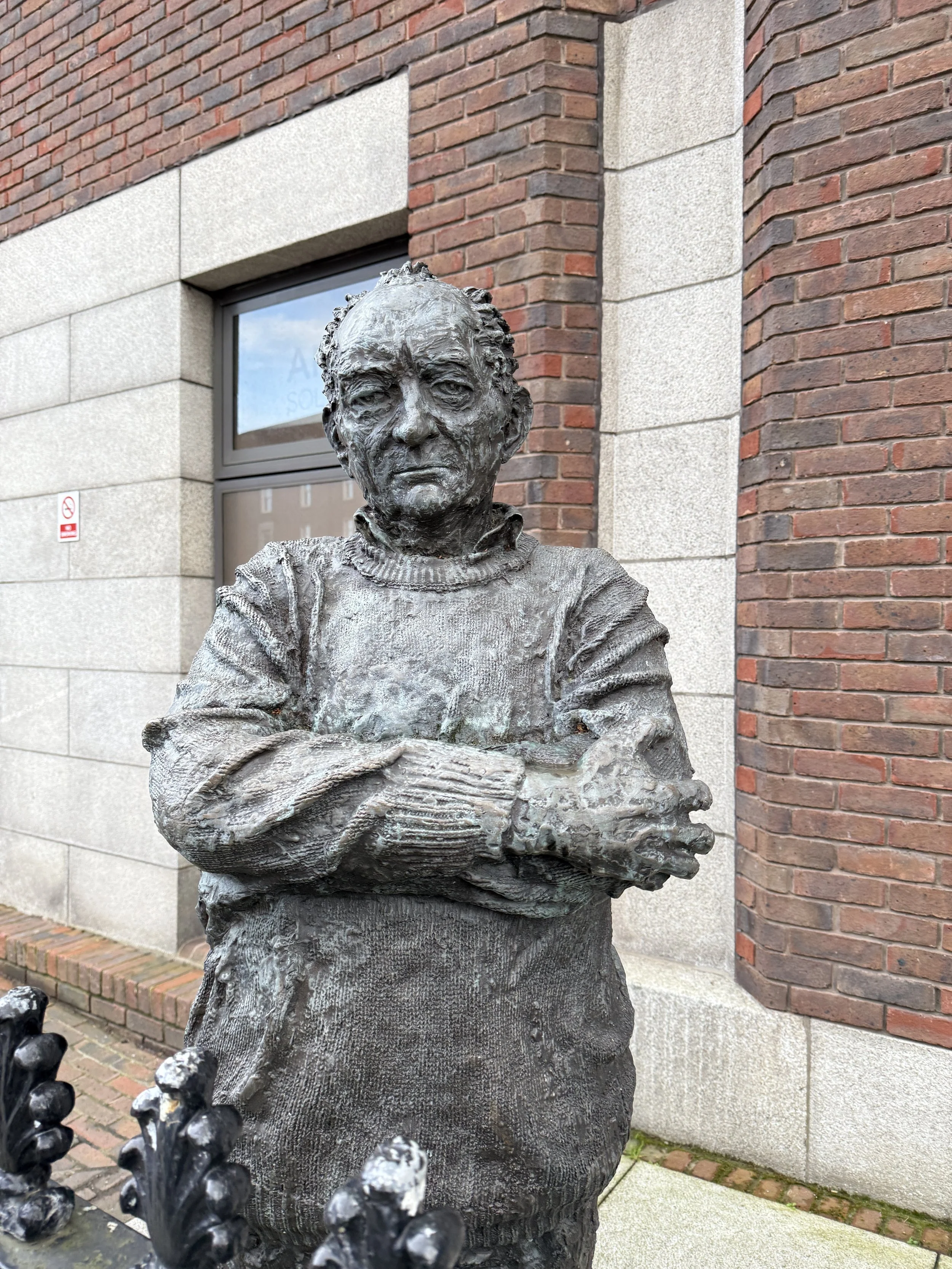
The double statue depicts both playwrights as they might have appeared in later life — Friel in a relaxed sweater with arms folded, Keane in an open-collared shirt, both carrying the unhurried confidence of men entirely comfortable in their own skin. The bronze plaque at their feet confirms their identities and summarises their lives and work with characteristic economy.
The statue is located on Upper Fitzwilliam Street, Dublin 2, outside the Irish Georgian Society headquarters — an appropriate setting given that both men wrote so vividly about the Ireland that Georgian Dublin looked down upon: rural, struggling, passionate and deeply human.
Brian Friel — The Voice of Displacement
Brian Friel was born on 9 January 1929 in Omagh, County Tyrone, in Northern Ireland. He is widely regarded as the greatest Irish playwright of the twentieth century — a claim few would seriously contest. His plays are performed worldwide, studied in universities across the globe, and return again and again to themes of language, memory, identity and the fragility of home.
His masterpiece, Translations (1980), set in a nineteenth century hedge school in Donegal, uses the mapping of Ireland by British cartographers — and the replacement of Irish place names with anglicised versions — as a devastating metaphor for cultural erasure. It is a play about language as power, about what is lost when a people are forced to speak in someone else's tongue, and it resonates as powerfully today as when it was first performed.
Dancing at Lughnasa (1990), perhaps his most celebrated work, is set in rural Donegal in 1936 and centres on five sisters whose lives are constrained by poverty, convention and the slow disappearance of the old Celtic world. It won the Olivier Award and the Tony Award for Best Play and has been performed in over forty countries.
Friel was a founding member of the Field Day Theatre Company alongside Brian Halligan and Seamus Heaney, which became one of the most important cultural forces in late twentieth century Ireland. He was awarded the Saoi of Aosdána, the highest honour available to Irish artists. He died on 2 October 2015, aged 86, in Greencastle, County Donegal.
John B. Keane — The Voice of Rural Ireland
John B. Keane was born on 21 July 1928 in Listowel, County Kerry — a market town in north Kerry that punches far above its weight in literary terms, home to the annual Listowel Writers' Week and a tradition of storytelling that runs deep in the local soil. Keane spent most of his adult life running a pub in Listowel, and that grounded, human perspective infuses every word he wrote.
Where Friel wrote with lyrical precision about the north, Keane wrote with raw, sometimes savage honesty about rural Ireland — the hunger for land, the cruelty of arranged marriages, the silence around sexuality and the grinding weight of poverty and social expectation.
His play Sive (1959), written when he was just thirty years old, caused a sensation when it was first performed by Listowel Drama Group — it had been rejected by the Abbey Theatre before going on to win the All-Ireland Drama Festival. It tells the story of a young orphan girl being sold into marriage with an elderly man, and it exposed the dark side of rural Irish life with a force that shocked and electrified audiences.
The Field (1965) is his most enduring work — a ferocious study of land obsession, violence and community silence set in rural Kerry. The 1990 film adaptation starring Richard Harris brought it to international audiences and remains one of the finest Irish films ever made.
Keane was elected a member of Aosdána and received honorary doctorates from several Irish universities. He died on 30 May 2002 in Listowel, aged 73, surrounded by the community he had written about and loved all his life.
Where to Find It
Upper Fitzwilliam Street, Dublin 2. The statue stands outside the Irish Georgian Society on one of Dublin's finest Georgian streets, a short walk from Merrion Square and the National Gallery.
Getting there: From St Stephen's Green, walk south along Baggot Street and turn onto Fitzwilliam Street. The statue is on the left hand side. Green Luas line to St Stephen's Green is the nearest stop.
Best time to visit: Daytime for the best light on the bronze. The Georgian streetscape behind makes for a beautiful backdrop.
Tip: Photograph the plaque separately as well as the full statue — the details on it are worth reading.
Did You Know?
Brian Friel's Translations was rejected by the Abbey Theatre before going on to become one of the most performed Irish plays in the world — a reminder that institutional gatekeepers don't always recognise greatness.
John B. Keane ran his pub in Listowel for decades while writing some of the most important plays in the Irish canon. He served pints and wrote masterpieces, often simultaneously.
The two men never collaborated directly, but they were contemporaries who shaped the same era of Irish theatre from very different parts of the country — Friel from the northern borderlands, Keane from the southern heartland.
The Field was originally a play before it became a film. Many people who have seen the Richard Harris film don't know that the story began on a stage in Kerry in 1965.
Nearby Statues
You're in the heart of Dublin's Georgian south city here. A short walk takes you to George Russell (AE) in Merrion Square, the Oscar Wilde statue also in Merrion Square, and Patrick Kavanagh on the Grand Canal.