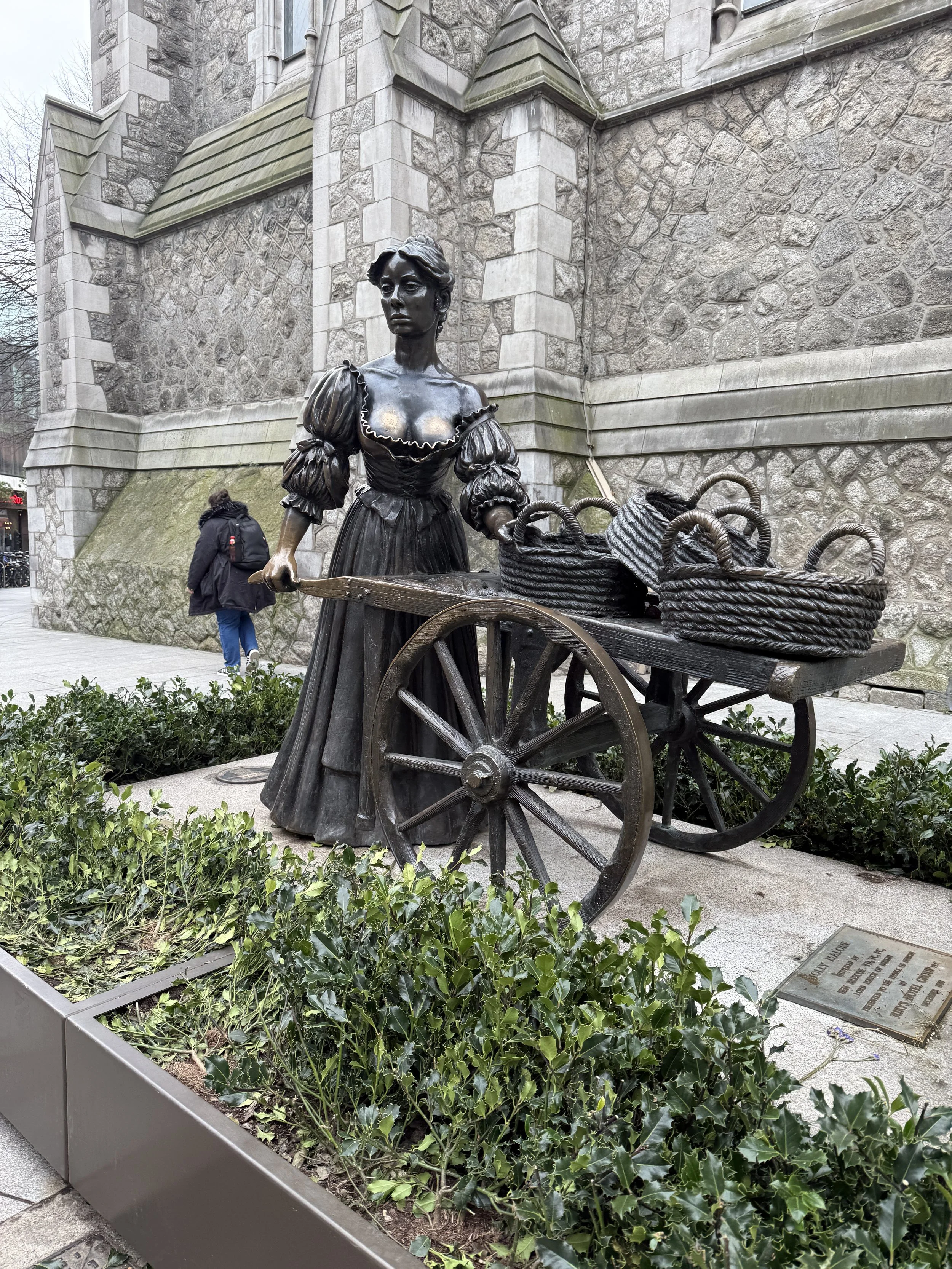
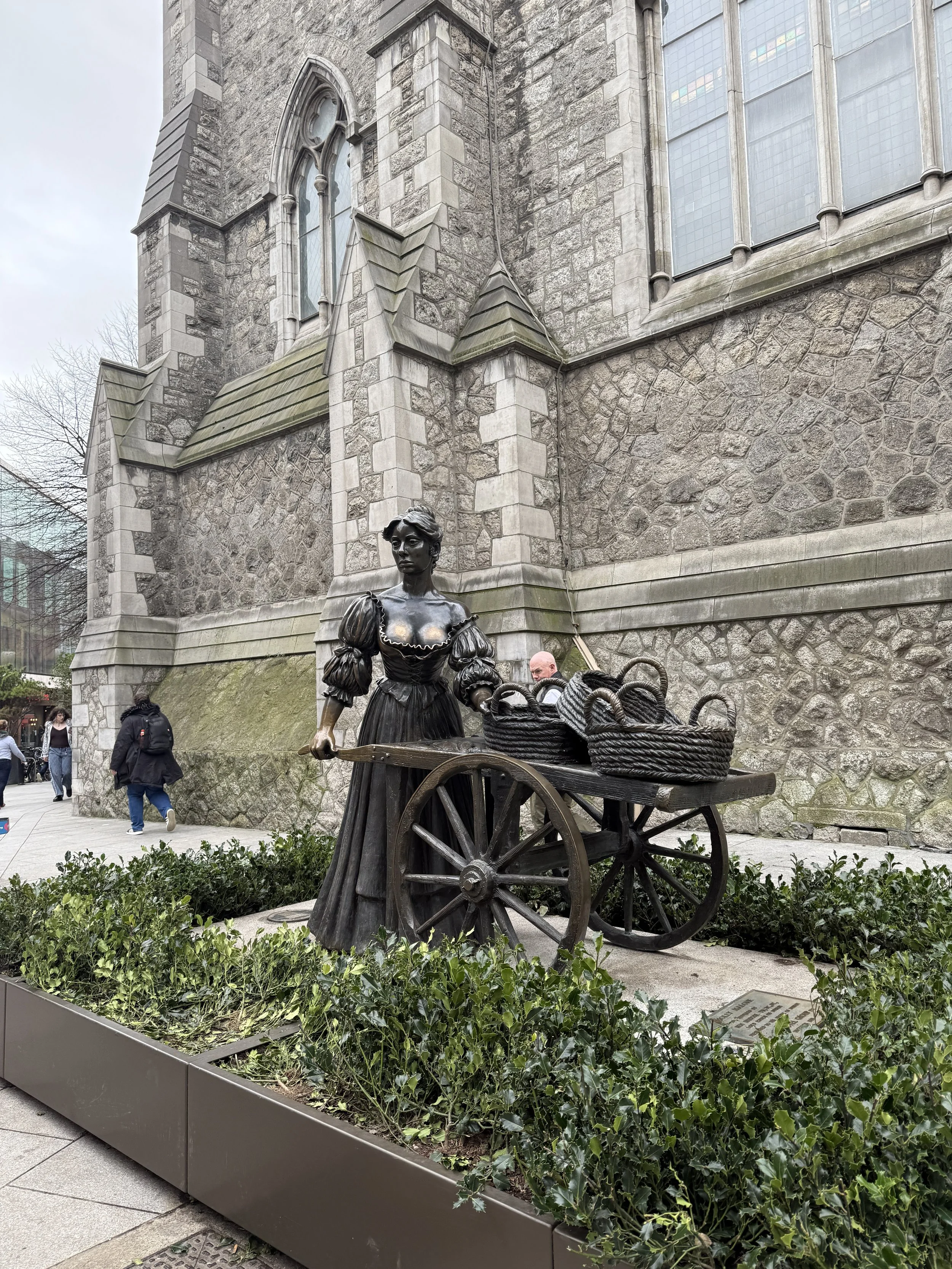
Molly Malone, Suffolk Street
The Tart with the Cart
Introduction
On Suffolk Street, in the shadow of the old St Andrew's Church, a bronze fisherwoman stands at her wheelbarrow, baskets piled high with cockles and mussels, gazing out at the passing city with an expression of quiet dignity. This is Molly Malone , Dublin's unofficial heroine, the subject of the city's unofficial anthem, and one of the most photographed statues in Ireland. She may or may not have existed. The song may or may not be ancient. None of it matters. Molly Malone belongs to Dublin as surely as the Liffey does.
The statue was designed by Dublin artist Jeanne Rynhart and unveiled on Grafton Street during the 1988 Dublin Millennium celebrations by then Lord Mayor of Dublin Ben Briscoe. In July 2014, it was relocated to its current position outside the Dublin Tourist Office (formerly St Andrew's Church) on Suffolk Street, to make way for Luas Cross City track-laying work at the old location.
The Statue
Rynhart's Molly is rendered in rich dark bronze, dressed in a low-cut 17th-century style gown with voluminous sleeves, her hair pinned up beneath a small cap. She leans forward into her wheelbarrow with the easy authority of someone who has been doing this all her life. The detail in the baskets, the cart's wooden wheels, and the folds of her dress is meticulous. She is not romanticised, she is working.
During the relocation in 2014, some cracks were discovered in the bronze, necessitating restoration work. The restoration included returning the statue to its original dark brown colour while preserving the well-worn areas rubbed by countless hands over the years. Those worn patches tell their own story, a piece of modern 'folklore' often told to tourists is that rubbing her breasts brings good luck. Dubliners tend to roll their eyes at this particular tradition.
The statue has attracted genuine controversy about the objectification it invites, and in February 2024 a local busker launched the "Leave Molly Malone" campaign, calling for an end to the practice. Flowerbeds have since been added around the plinth to create some distance between Molly and the crowd.
The Story Behind the Song
The song tells the fictional tale of a fishwife who plied her trade on the streets of Dublin and died young, of a fever. Whether any real Molly Malone existed behind the song is a question that has never been satisfactorily resolved. There are at least three songs that feature a character named Molly Malone that pre-date the earliest known version of "Cockles and Mussels" by several decades. The earliest confirmed publication of the song as we know it dates to the 1880s. Some historians attribute it to a Scottish composer named James Yorkston.
None of which has dimmed the song's hold on Dublin's identity. Versions of the song have been covered by a range of Irish musicians including U2, Sinéad O'Connor and The Dubliners. It is played at major sporting occasions, sung at the end of nights out, and taught to schoolchildren as a matter of civic identity. Molly Malone, real or not, is Dublin.
Where to Find It
Suffolk Street, Dublin 2. The statue stands directly outside the former St Andrew's Church, now the Dublin Tourism Centre, on Suffolk Street. O'Neill's pub faces it directly across the street.
Getting there: A five-minute walk from Grafton Street, Trinity College, or Dame Street. The nearest Luas stops are Dawson Street or Trinity (both Red Line). Multiple bus routes run along Dame Street, a two-minute walk.
Best time to visit: Morning light catches the bronze beautifully. The statue is busy throughout the day with tourists, weekday mornings are quietest for photographs. The planting around the base has improved the setting considerably since 2024.
Did You Know?
When the statue was first unveiled in 1988, it was not universally praised. The director of the Arts Council wrote to Bord Fáilte expressing members' objections, calling the statue "entirely deficient in artistic point and merit." Lord Mayor Ben Briscoe defended it, saying it was regarded with warmth and affection by the city. Four decades of footfall have settled the argument.
When the statue was moved in 2014, Dublin was briefly bereft. The Luas project team were reportedly inundated with one question above all others: when is she coming back?
The song "Cockles and Mussels" was declared the unofficial anthem of the Republic of Ireland's football team and has been sung at international matches for decades. Molly follows the team, apparently, wherever they go.
Nearby Statues
From Suffolk Street you're ideally placed to explore Dublin's cultural trail on foot. James Joyce stands on North Earl Street across the Liffey. Oscar Wilde reclines in Merrion Square. Phil Lynott holds court on Harry Street. The Famine Memorial is a fifteen-minute walk along the quays. We have pages for all of them — keep exploring.