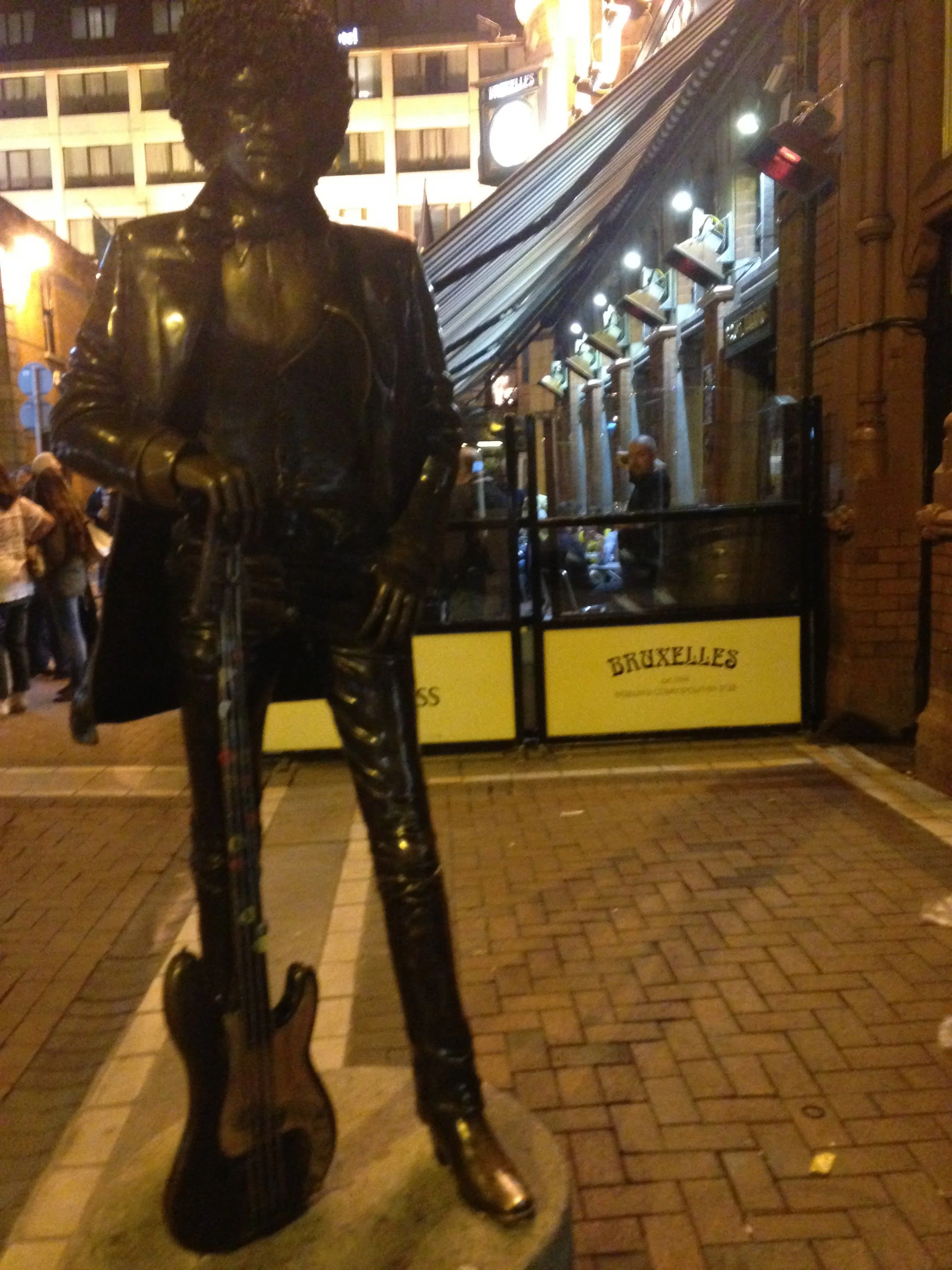
Phil Lynott Statue, Dublin
The Rocker Who Never Left
Introduction
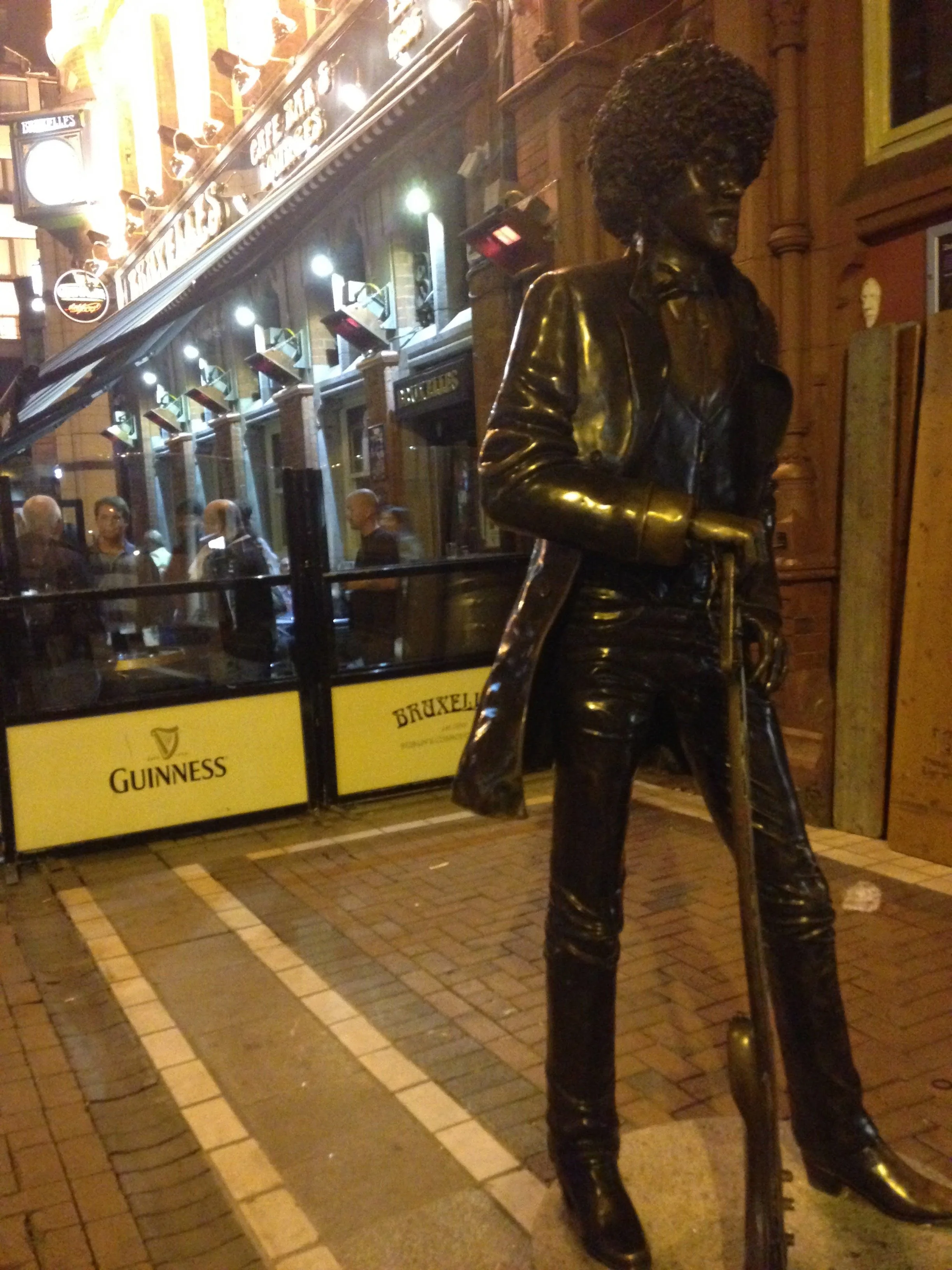
On a narrow stretch of Harry Street in the heart of Dublin, just off the bustling Grafton Street, stands one of the city's most loved and most photographed statues. Bronze, larger than life, guitar in hand — this is Phil Lynott, the frontman of Thin Lizzy, immortalised just a few steps from Bruxelles, the pub where he used to drink with his bandmates. For fans who make the pilgrimage here, it's more than a photo opportunity. It's a moment of connection with a man who carried Dublin in his soul even when the world had his name on its lips.
Phil Lynott was no ordinary rock star. He was the first Black Irishman to achieve international rock stardom, a poet who wrote love songs for his city, his mother, and his daughters, and a performer of magnetic charisma who packed arenas across Europe and America while never losing the accent or the attitude of a working-class Dublin kid. He died on 4 January 1986, aged just 36, and Dublin has never quite gotten over it.
The Statue
The statue was sculpted by Paul Daly and unveiled on 18 August 2005 on Harry Street, Dublin 2. It depicts Lynott in his signature rock star pose — leather jacket, flared jeans, bass guitar — capturing the swagger and cool that made him unlike anyone else on a stage. The choice of location was deliberate. Bruxelles pub behind the statue was one of Phil's regular haunts, and Harry Street sits in the cultural and social heart of Dublin city centre.
The statue quickly became one of Dublin's most visited landmarks and a focal point for fans every year on the anniversary of his death and on what would have been his birthday, 20 August. Flowers, guitar picks and handwritten notes are regularly left at its base.
The Story Behind the Man
Philip Parris Lynott was born in Birmingham in 1949 to an Irish mother, Philomena, and a Brazilian-Guyanese father, Cecil Parris. He was raised in Crumlin, Dublin, by his grandmother Sarah, and it was the streets of Dublin's southside that shaped him. He taught himself guitar and bass, fell in love with rhythm and blues, and by his late teens was fronting bands around the Dublin circuit.
Thin Lizzy formed in 1969 and spent years grinding out a reputation on the Irish and UK pub and club scene before breaking through internationally. Their 1976 album Jailbreak and its iconic track The Boys Are Back in Town turned them into global rock stars overnight. What followed was a decade of hard touring, hard living, and some of the most enduring rock songs ever written by an Irish artist — Whiskey in the Jar, Dancing in the Moonlight, Waiting for an Alibi, Rosalie.
But behind the rock and roll exterior was a man of deep sensitivity. Lynott wrote poetry, published two collections, and poured his Dublin identity into his lyrics with a pride that resonated far beyond Ireland. He wrote Dublin as a love letter to his city. He wrote Sarah for his grandmother. He wrote Parisienne Walkways — which became one of the best-selling Irish singles of all time — with guitarist Gary Moore.
His personal life was turbulent. Substance abuse took hold in the early 1980s and despite attempts at recovery, he died of heart failure and pneumonia on 4 January 1986 in Salisbury, England. He was 36 years old. His mother Philomena, who became one of Dublin's most beloved figures in her own right through her work preserving his legacy, passed away in 2019.
Where to Find It
Harry Street, Dublin 2. The statue stands at the junction of Harry Street and Grafton Street, directly outside Bruxelles pub. It is impossible to miss.
Nearest landmarks: Grafton Street, St Stephen's Green, Bewley's Café, Kehoe's pub.
Getting there: A short walk from any city centre bus stop on Nassau Street or Dame Street. Green Luas line to St Stephen's Green is a 5-minute walk.
Best time to visit: Early morning for photos without crowds. The statue is particularly atmospheric at night when Harry Street is lit up and Bruxelles is buzzing.
Tip: Step back to the corner of Grafton Street for the best full-length photo of the statue with the pub behind it.
Did You Know?
Every year on the anniversary of his death, fans gather at the statue for a spontaneous tribute — guitar picks, flowers, handwritten notes and the occasional impromptu song.
Phil Lynott was the first Black Irishman to achieve international rock superstardom, at a time when Ireland was an almost entirely homogeneous society. His very existence challenged assumptions about what an Irish person looked and sounded like.
His mother Philomena ran a memorabilia shop called Vibe for Philo near the statue for many years, keeping his memory alive on the very streets where he grew up listening to music.
The statue's location outside Bruxelles is no accident — the pub's rock and roll identity owes much to its association with Lynott, and it remains a place of pilgrimage for music fans visiting Dublin.
Nearby Statues
Once you've visited Phil, you're in the heart of Dublin's statue trail. A short walk takes you to the Molly Malone statue on Suffolk Street, James Joyce on North Earl Street, and the Famine Memorial on the Custom House Quays.