James Joyce, North Earl Street
James Joyce Statue, North Earl Street, Dublin — The Prick with the Stick
Introduction
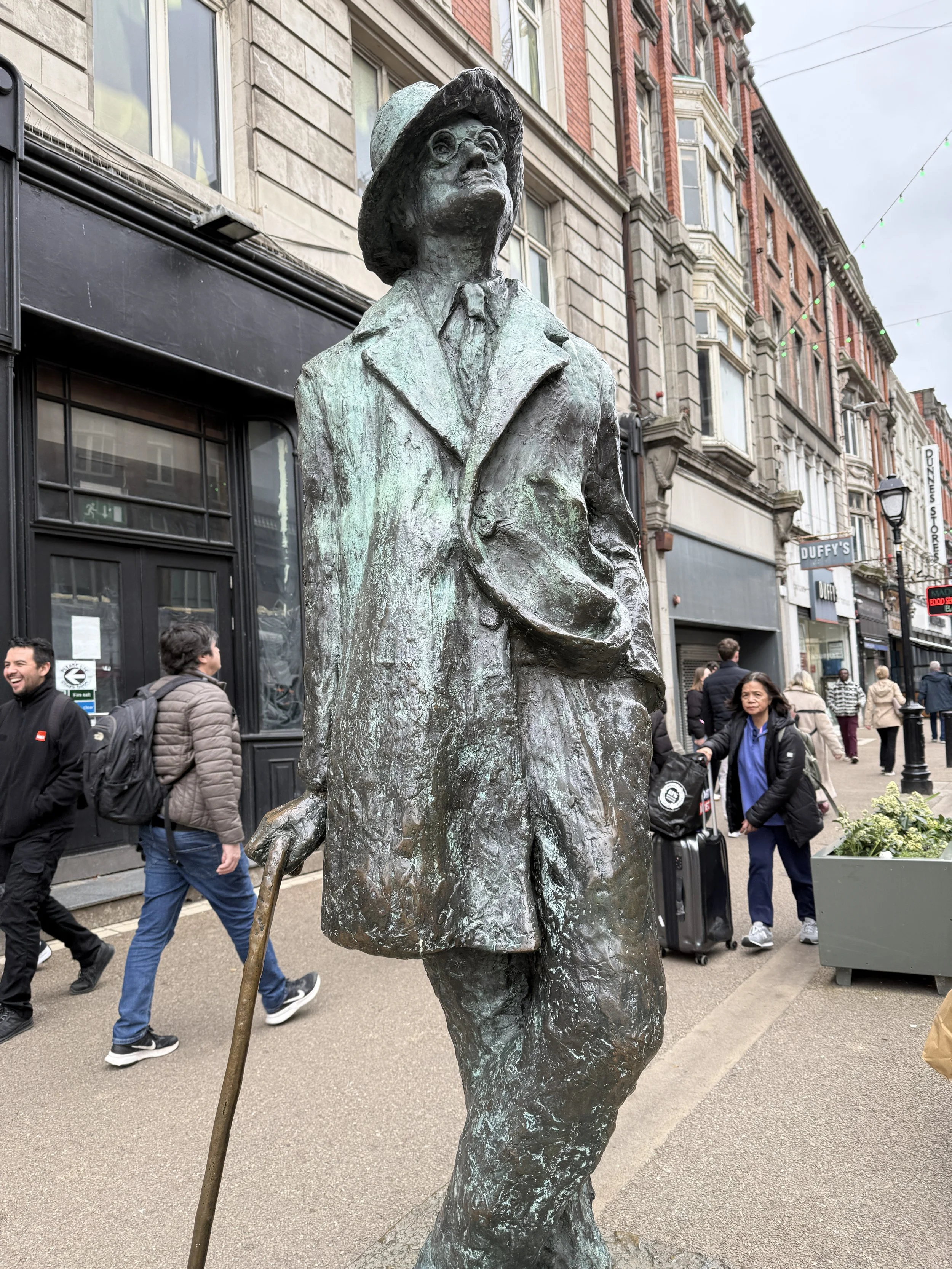
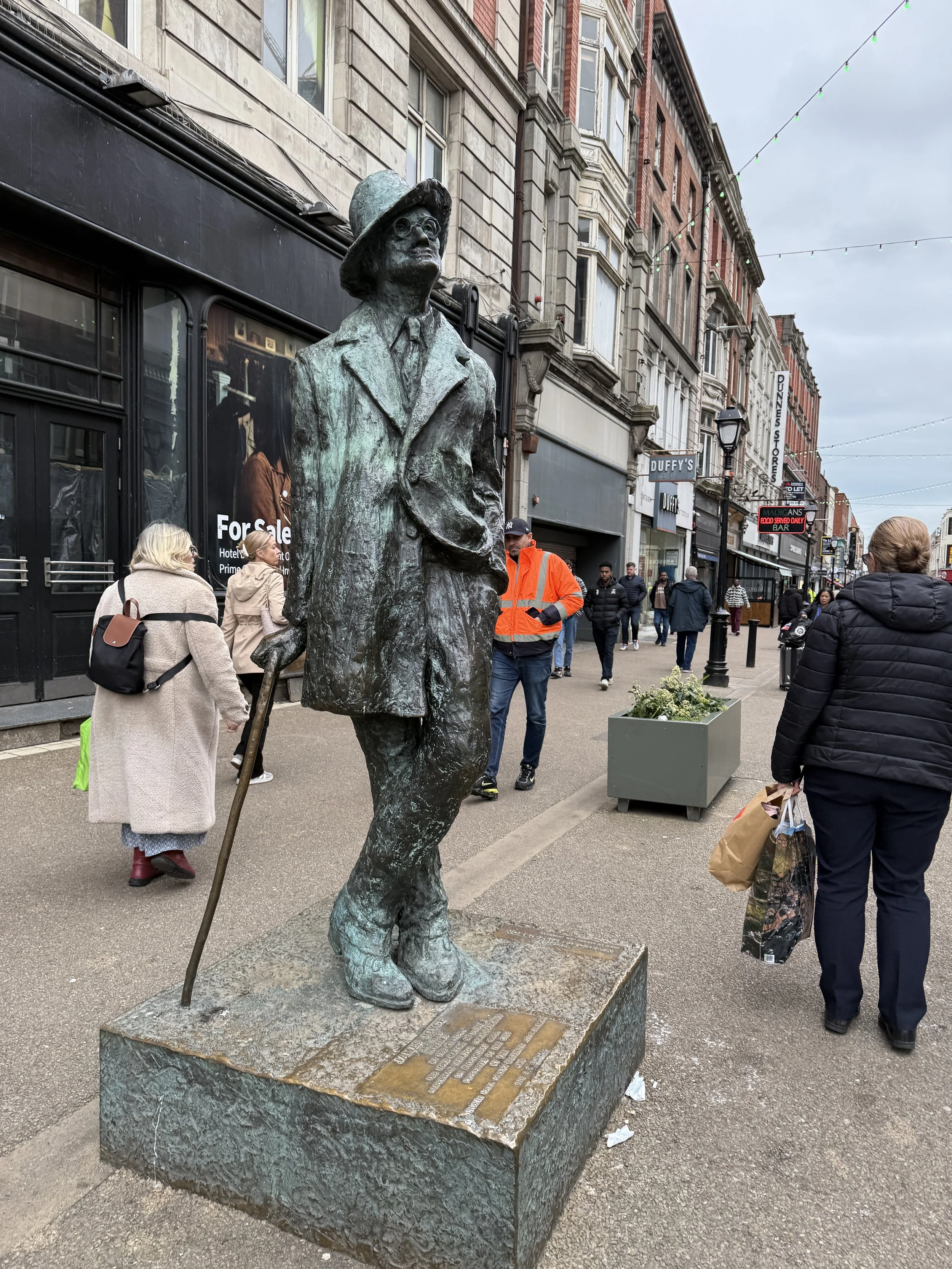
On North Earl Street, just a step off the roar of O'Connell Street, a bronze figure stands cross-legged on a low plinth, cane in hand, hat tilted at a rakish angle, gazing upward with an expression that hovers somewhere between contemplation and mild amusement. This is James Joyce , arguably the most important writer in the English language of the twentieth century, and unquestionably the writer who made Dublin immortal.
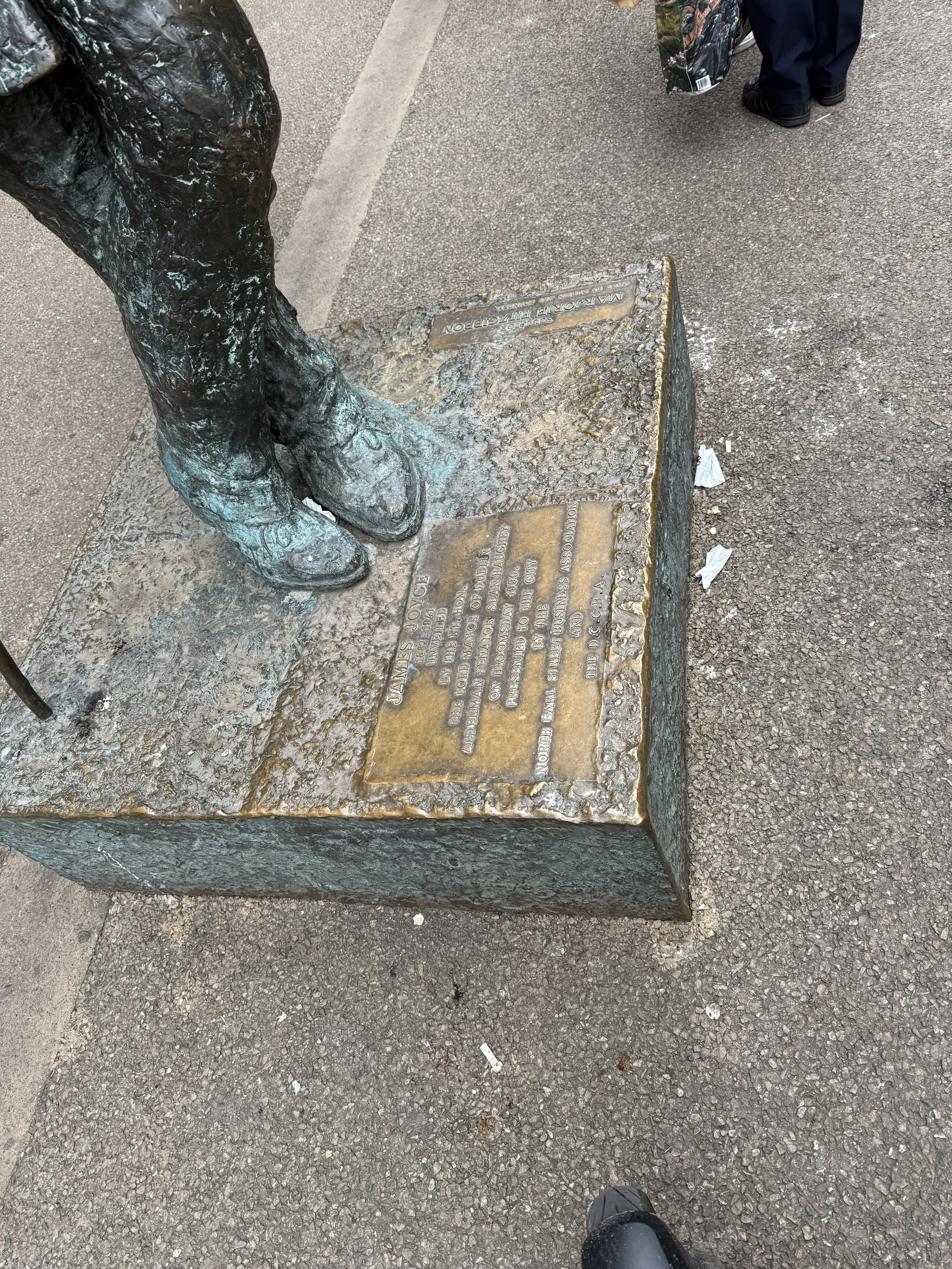
The statue is the work of Irish-American sculptor Marjorie Fitzgibbon (1930–2018), unveiled on Bloomsday, 16 June, 1990, and presented to Dublin city by the North Earl Street Business Association. It stands eight feet tall including its plinth, and it has acquired one of the best, and most Joycean, nicknames of any statue in the city: the prick with the stick. Joyce would have loved the vulgar rhyme.
The Statue
The statue depicts Joyce standing cross-legged, leaning on his walking stick, one hand in a pocket, hat slightly askew, gazing contemplatively upwards as if pondering his home city and what he could do with it in his fiction. The detail is excellent: the round wire-rimmed glasses, the long overcoat, the slight air of self-possession. He looks exactly like a man who has spent decades watching Dublin from a distance, absorbing every detail, storing it all away.
The location is fitting. Both his short story collection Dubliners and his masterwork Ulysses are set in Dublin, making the city's heart the ideal place for him to be honoured. North Earl Street sits in the heart of the streetscape that Joyce walked obsessively, and which he then transplanted, in meticulous, almost hallucinatory detail, into the pages of his fiction.
The Story Behind the Man
Although he spent much of his life abroad, Joyce's works are deeply intertwined with Dublin's streets, people, and spirit. He was born in Rathgar in 1882, educated by the Jesuits, and showed early promise that astonished his teachers. He studied at University College Dublin and began writing reviews and poetry in his early twenties before leaving Ireland, first for Paris, then Trieste, then Zurich, never truly to return.
Yet Dublin never left him. His great novel Ulysses, published in 1922, maps a single day in Dublin, 16 June 1904, with a precision and an ambition no novel had attempted before. Every street, every pub, every tram route is exactly where it should be. The book is simultaneously a love letter to the city and a demolition of every myth Ireland told about itself.
His relationship with Ireland was complicated, the Irish government showed little interest in repatriating his remains after his death in 1941, citing his strained relationship with the state and his decision to live abroad. Dublin has since embraced him as one of its greatest cultural figures. The statue on North Earl Street is part of that embrace, belated perhaps, but wholehearted.
Where to Find It
North Earl Street, Dublin 1. The statue stands at the junction of North Earl Street and O'Connell Street, beside the old Café Kylemore building. It is impossible to miss.
Getting there: A short walk north across the Liffey from the city centre. The Luas Red Line stops at Abbey Street, two minutes away. O'Connell Street bus stops are directly beside the statue.
Best time to visit: The statue faces outward toward the street and photographs well in the morning light. The street is busiest mid-morning; early morning visits give you breathing room for photographs.
Did You Know?
The statue was unveiled on 16 June 1990, Bloomsday, the anniversary of the single day on which the entire action of Ulysses takes place. Every year on that date, Joyce enthusiasts gather across Dublin to re-enact scenes from the novel, dress in Edwardian clothing, and read aloud from its pages.
Marjorie Fitzgibbon also created the bust of James Joyce on the south side of St Stephen's Green, facing Newman House, the former home of University College Dublin where Joyce studied. Two Fitzgibbon Joyces in the one city, a fitting tribute to a writer who never really left.
The nickname the prick with the stick is one of Dublin's most beloved pieces of street wit. The Molly Malone statue, a short walk away, has its own, the tart with the cart. Dublin has never been a city to let dignity get in the way of a good rhyme.
Nearby Statues
From North Earl Street you're within easy walking distance of some of Dublin's finest monuments. Cross the Liffey and you're in reach of the Famine Memorial on Custom House Quay, the Linesman on City Quay, and further along, Oscar Wilde in Merrion Square. Head south toward Grafton Street and you'll find Phil Lynott on Harry Street. We have pages for all of them — keep exploring.