The Famine Memorial, Custom House Quay
The Figures That Walk Toward the Sea
Introduction
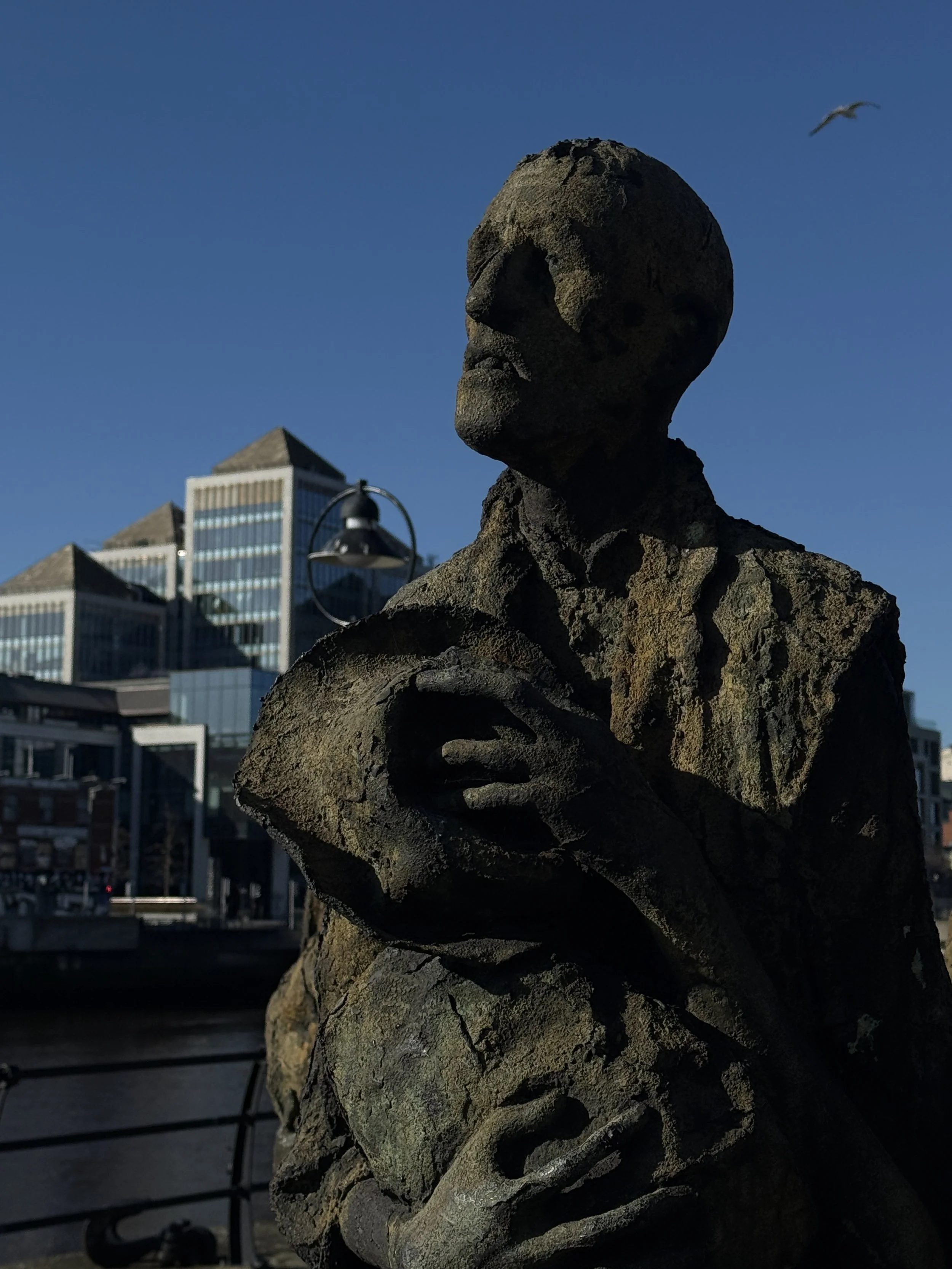
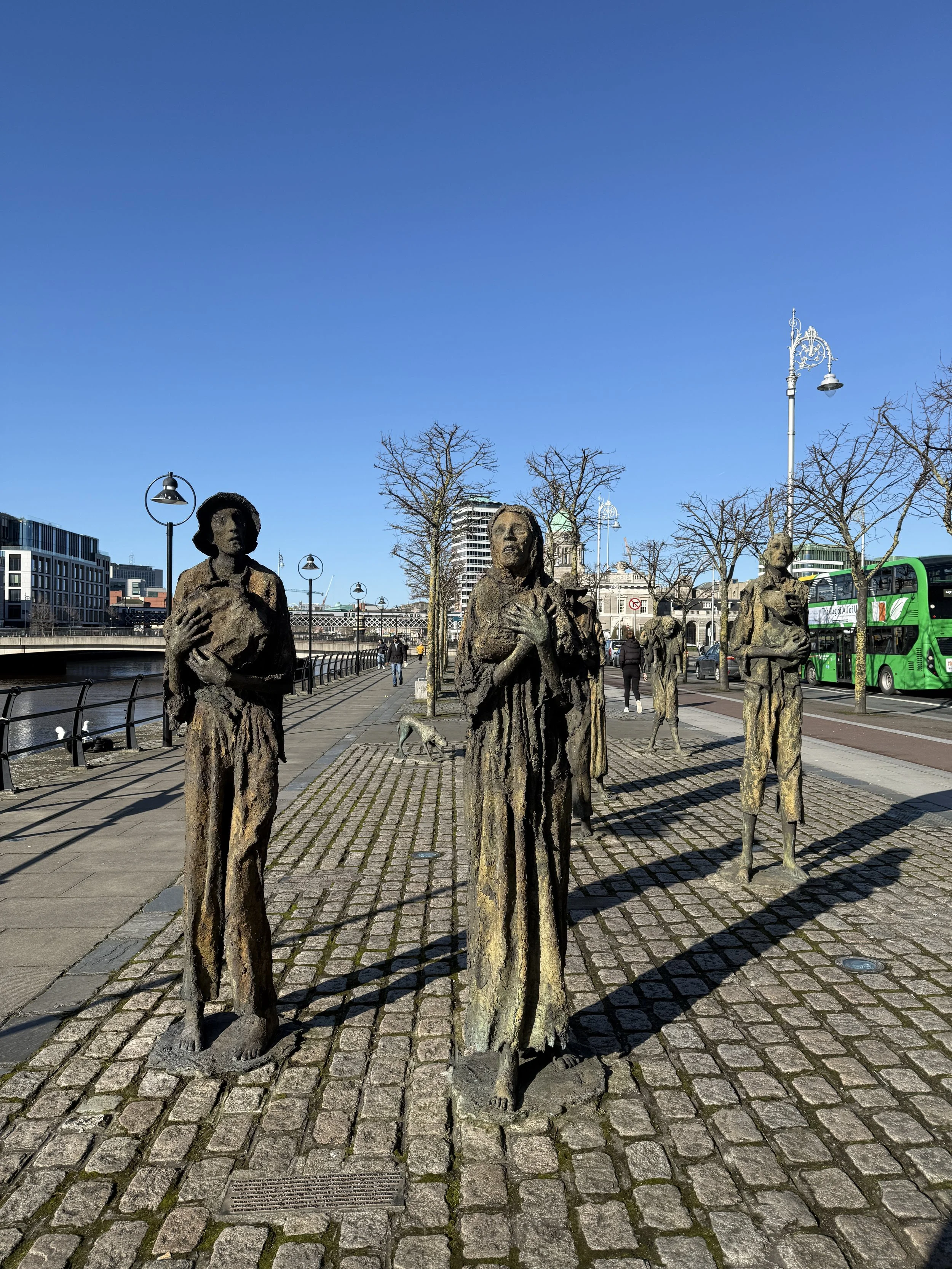
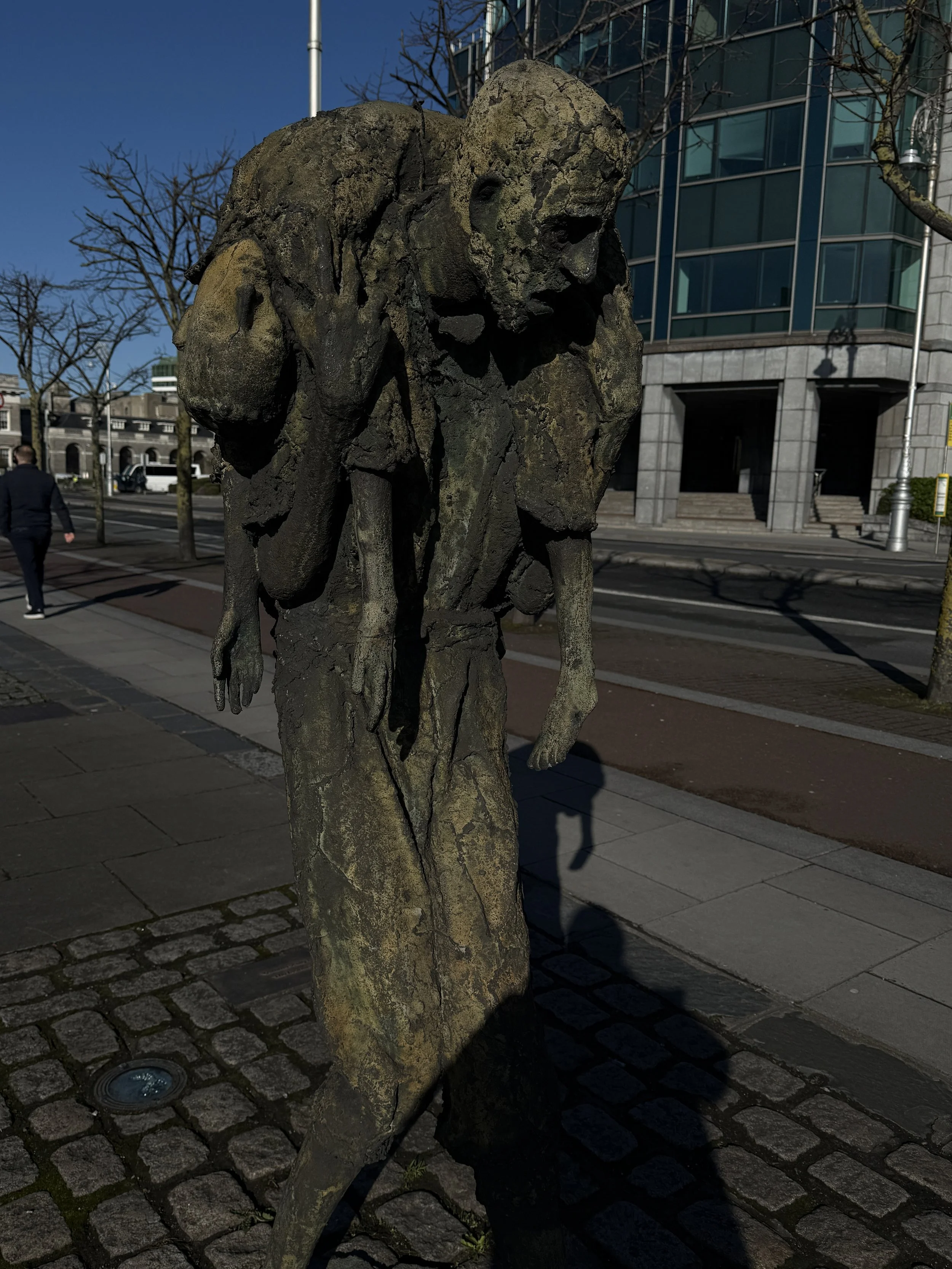
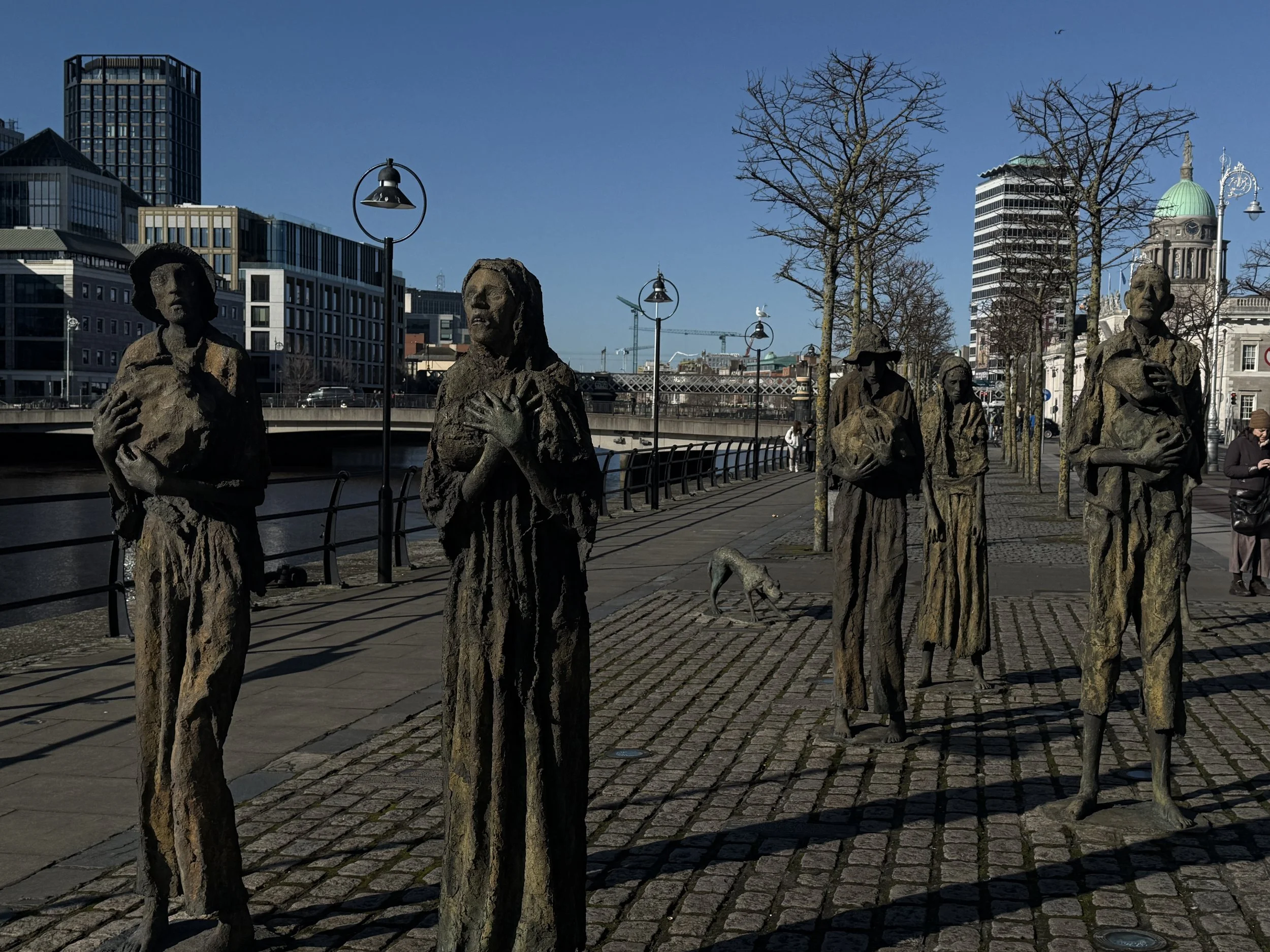
On Custom House Quay, seven bronze figures walk toward the River Liffey. They are skeletal, hollow-eyed, barely clothed — their flesh stripped to almost nothing, their faces turned upward with an expression somewhere between despair and determination. They carry nothing. They are leaving everything.
The Famine Memorial by sculptor Rowan Gillespie was unveiled in 1997 and stands as one of the most powerful pieces of public art in Ireland. It commemorates the Great Famine of 1845–1852, during which over one million people died and another million emigrated, the single most catastrophic event in modern Irish history.
The Statue
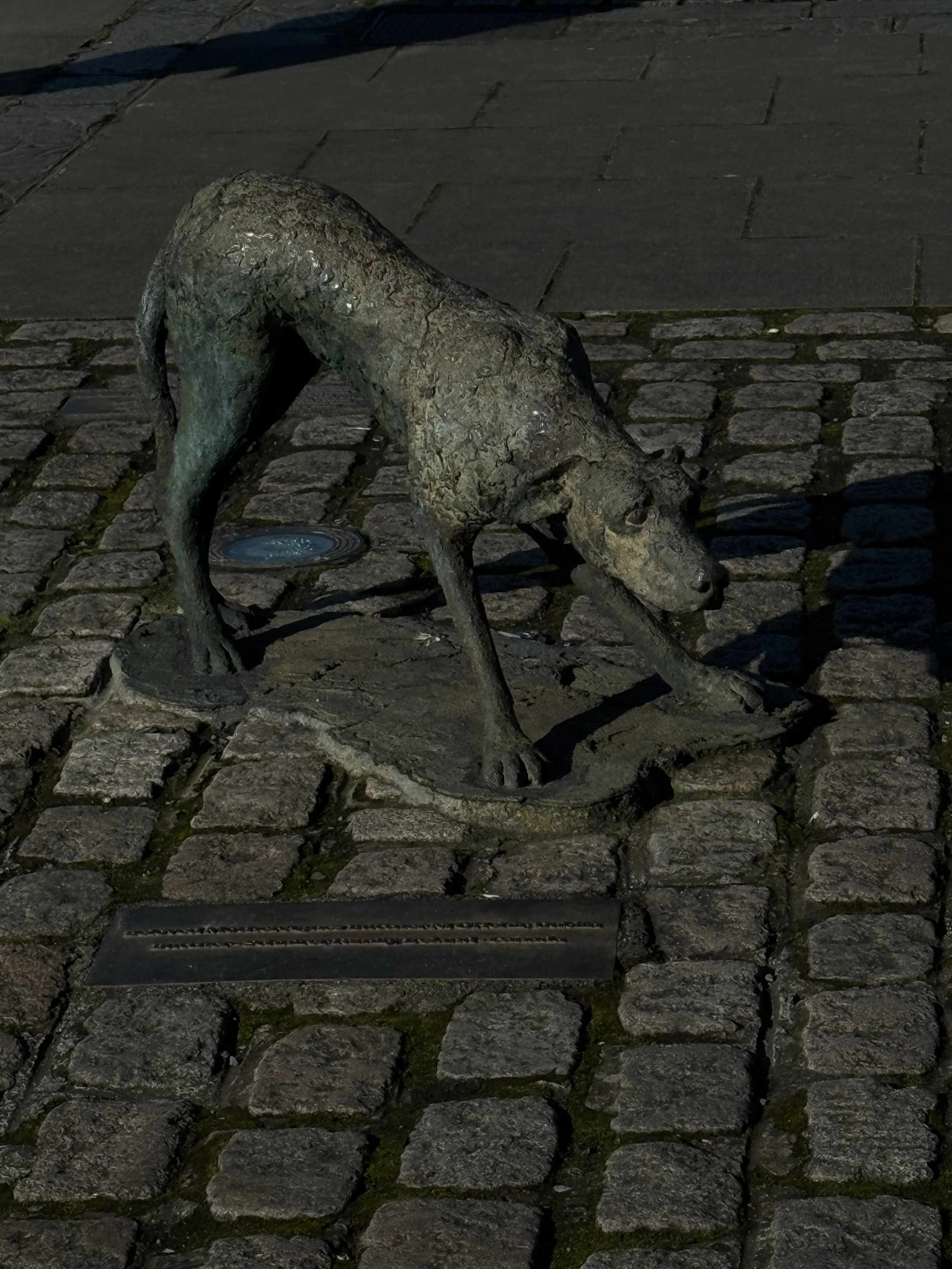
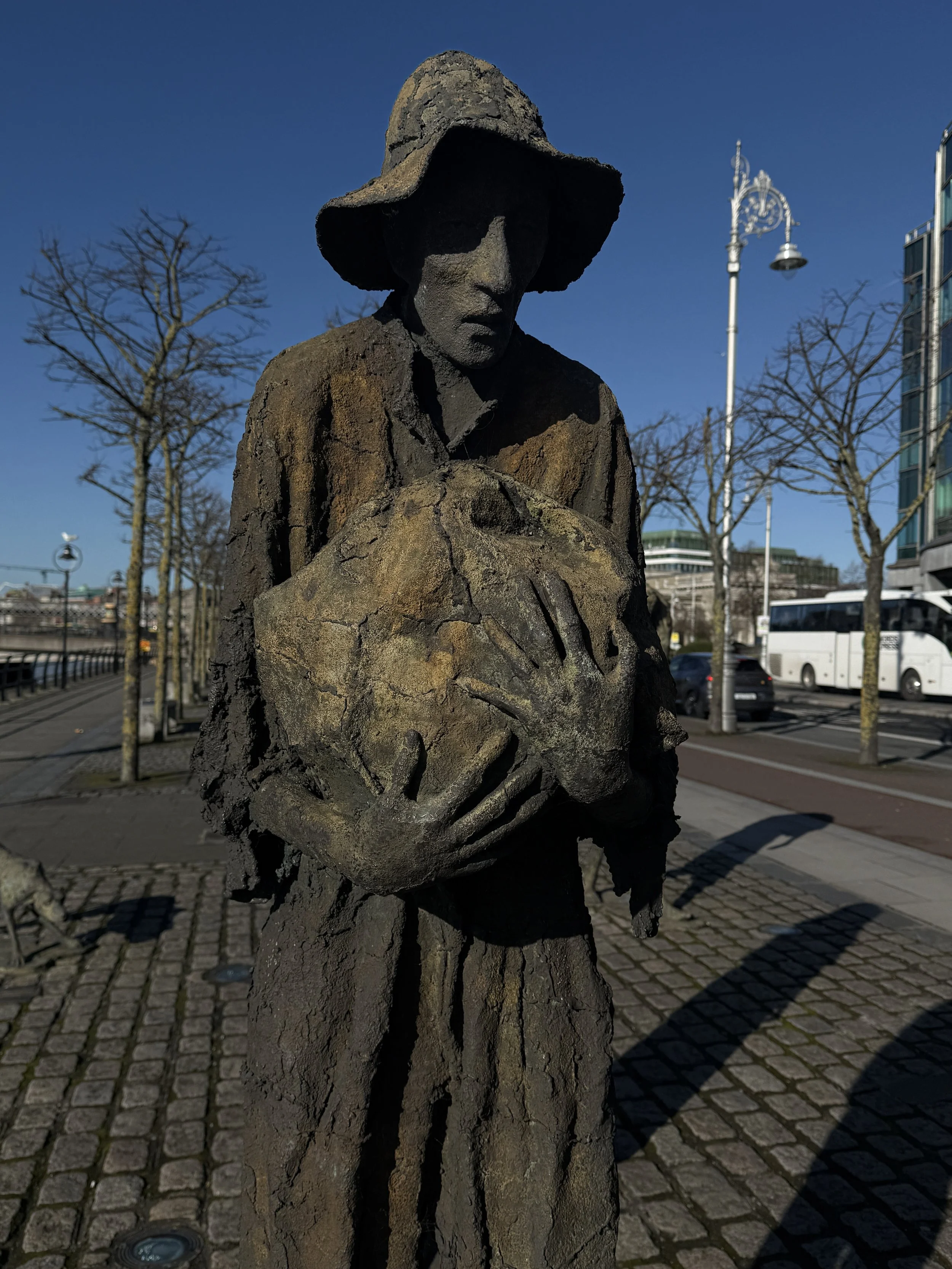
The seven figures are life-sized but seem impossibly thin, their bronze surfaces rough and textured as though the metal itself is in decay. Each figure is distinct, a young man clutching something to his chest, a woman with a dog at her feet, a gaunt figure whose coat hangs from bones. They move as a group but each seems alone, lost in private suffering.
The sculptures were designed and crafted by Dublin sculptor Rowan Gillespie and are located on Custom House Quay in Dublin's Docklands. This location is particularly appropriate and historic, as one of the first voyages of the Famine period was on the Perseverance, which sailed from Custom House Quay on St Patrick's Day 1846.
The quayside setting amplifies the work enormously. Behind the figures, the Liffey flows to the sea, the same route the emigrant ships took. The Custom House dome rises in the background. Modern Dublin surrounds them: office blocks, bridges, a green double-decker bus. The contrast between the starving bronze figures and the prosperous city they walk through is deliberate and devastating.
The History
The Great Famine was caused by the failure of the potato crop, which a large portion of the Irish population depended on for survival. Between 1845 and 1852, the potato blight Phytophthora infestans destroyed successive harvests. The British government's response was inadequate and, many historians argue, callous food continued to be exported from Ireland throughout the Famine years.
The scale of loss is almost impossible to comprehend. Ireland's population fell from approximately 8 million before the Famine to around 6 million by 1851 , and continued falling for decades afterward as emigration became a permanent feature of Irish life. The effects shaped the Irish diaspora across America, Australia, Britain and beyond.
The quay where these figures stand was one of the departure points. Many of those who left had never seen the sea before.
The Sculptor
Rowan Gillespie is one of Ireland's most significant public sculptors. Born in Dublin, he has created public works across Ireland and internationally. He is also the sculptor of the companion piece Arrival, installed in Toronto, Canada a group of famine emigrants reaching dry land on the other side of the Atlantic. Together the two works form a single story told across an ocean.
Where to Find It
Custom House Quay, Dublin 1, on the north bank of the Liffey between the Samuel Beckett Bridge and the Sean O'Casey Bridge. The figures face south toward the river. They are at street level and impossible to miss when walking the quayside.
Did You Know?
A companion sculpture called Arrival by Rowan Gillespie stands in Toronto, Canada , depicting the same emigrants reaching the far shore. The two works are separated by thousands of miles of ocean but tell one continuous story.
Nearby Statues
We will have a page for The Linesman nearby on the quays coming soon.